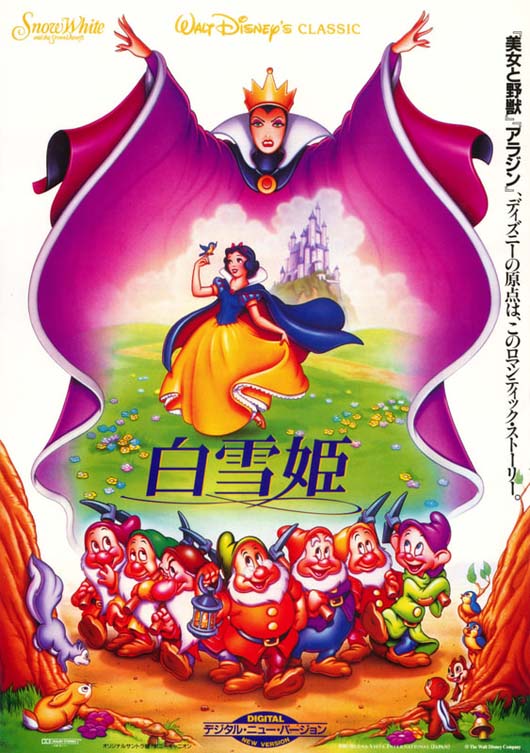
Discover on this page the various poster formats used to promote the film throughout its successive theatrical releases in Japan.
The title of the film is 白雪姫 (Shirayuki-Hime).
1950
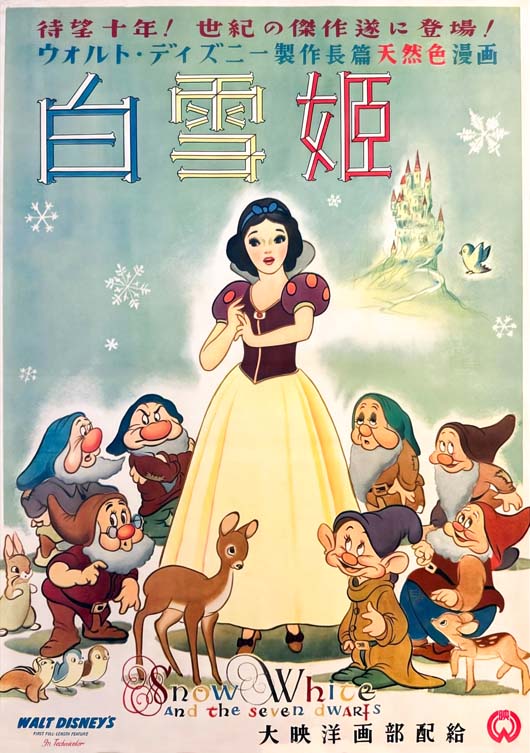
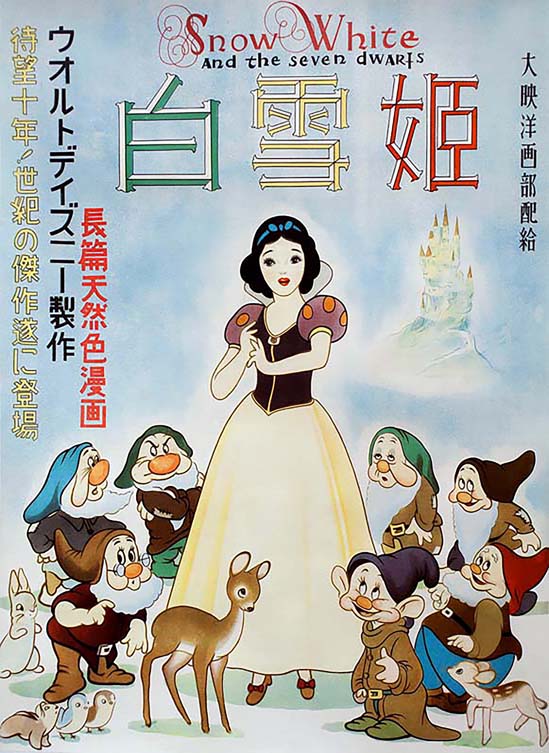
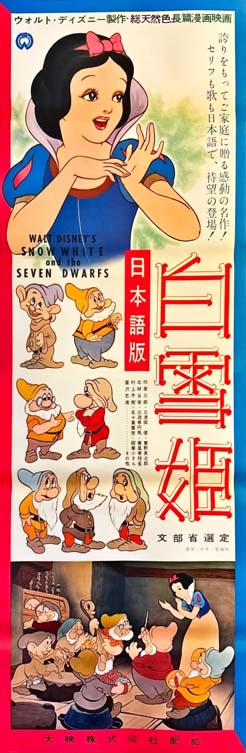
Snow White and the Seven Dwarfs was first released in Japan by Daiei Film Division (大映) on September 26, 1950 in Tokyo in the original English version subtitled in Japanese. The Second Sino-Japanese War, and then World War II, prevented the film from being released earlier. Hence the blurbs on the poster: “Awaited for ten years! The masterpiece of the century finally appears! A Walt Disney production—feature-length, natural-color cartoon”
1957
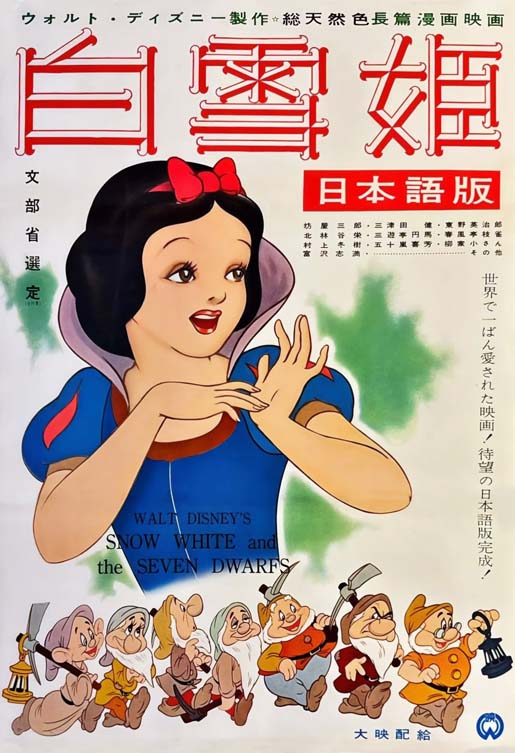
Daiei reissued “Walt Disney’s full-color animated feature film” Snow White and the Seven Dwarfs on December 17, 1957 — but this time, the film was presented in a Japanese-language dubbed version. The poster prominently announces the “Japanese Version” in a large red box and even credits the Japanese voice cast. Its taglines proclaim: “The world’s most beloved movie! The long-awaited Japanese version is finally here! A Walt Disney production — feature-length, natural-color cartoon.” The poster also bears the notice: “Selected by the Ministry of Education.”
1968
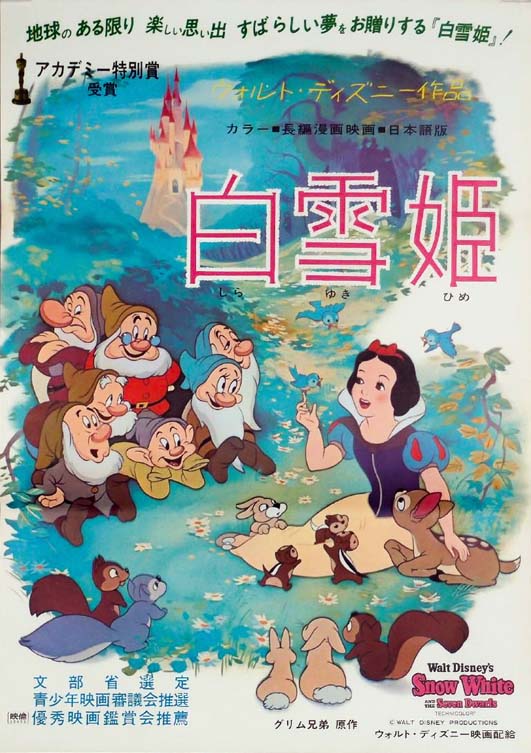
On July 20, 1968, Walt Disney Pictures Distribution reissued Snow White and the Seven Dwarfs with the tagline: “Snow White will bring you joyful memories and wonderful dreams for as long as the earth exists!” The poster also featured the phrases: “Special Academy Award,” “Color — Feature-length animated film — Japanese version,” and “Selected by the Ministry of Education, recommended by the Youth Film Council Election and by the Excellent Film Appreciation Society.”
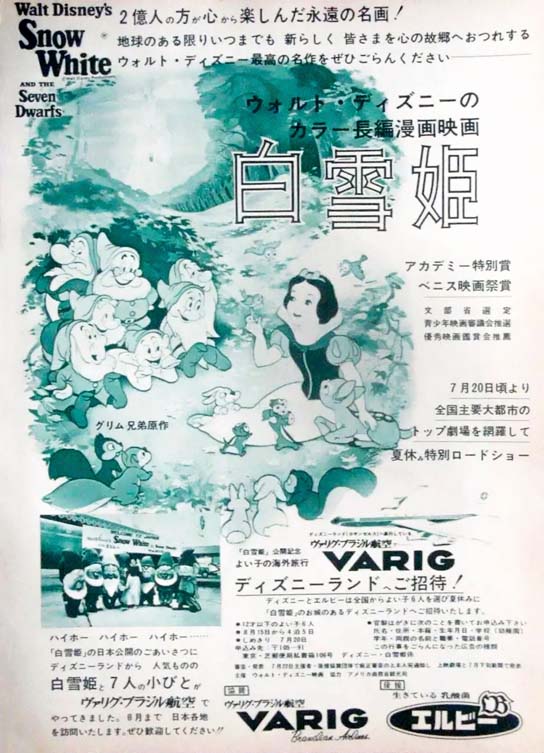
The summer holiday roadshow was further promoted by appearances from Disneyland characters, who traveled from city to city thanks to the partnership of Brazilian airline Varig, which also organized a contest offering participants the chance to win a trip to Disneyland.
1980
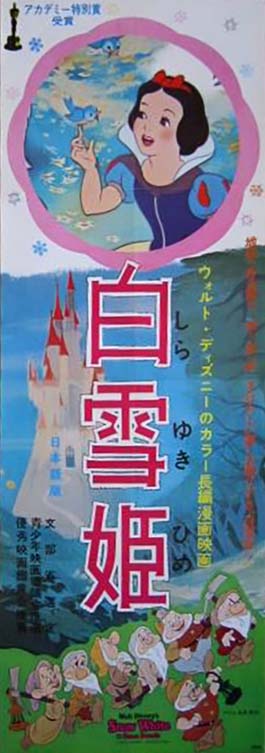
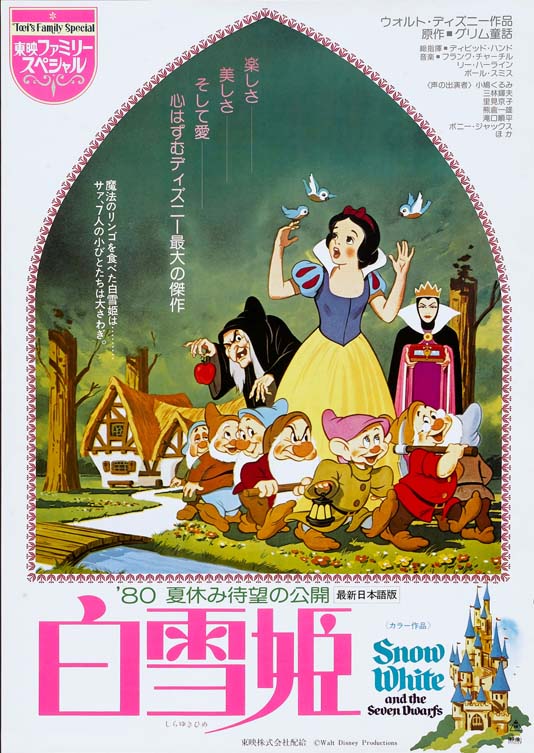
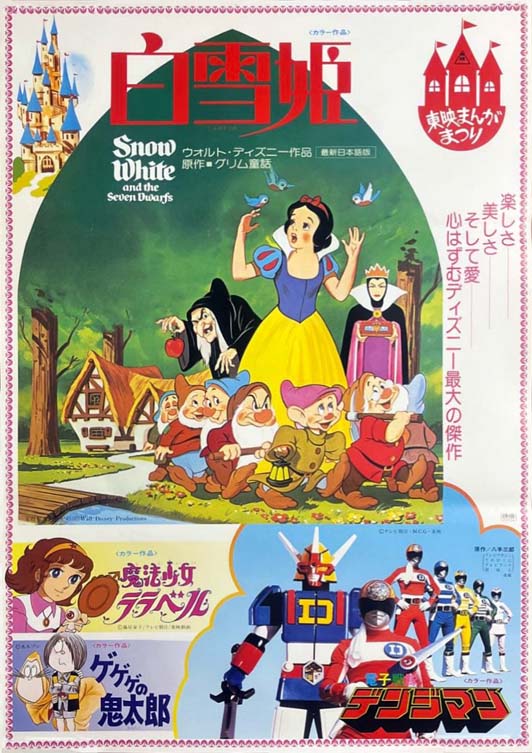
On July 12, 1980, as part of the “Toei Family Special Film Festival,” Snow White and the Seven Dwarfs returned to Japanese theaters through Toei Company with a brand-new series of posters promoting a newly dubbed Japanese version of the film.
The main poster proclaimed: “Fun, Beauty and Love — Disney’s greatest masterpiece that will make your heart flutter,” alongside the line: “Snow White ate the magic apple and the dwarfs are in an uproar.” It also advertised the release as: “A highly anticipated 1980 summer vacation release. The latest Japanese version.” The new Japanese voice cast was prominently credited as well.
Other posters paired Snow White with three short features produced locally by Toei Animation to promote television series: Mahô shôjo Lalabelle: Umi ga yobu natsuyatsumi (Magical Girl Lalabelle), Gegege no Kitarô: Chisôgan (Spooky Kitaro), and Denshi Sentai Denjiman: The Movie (Denjiman), the latter being the only live-action production of the program.
1985
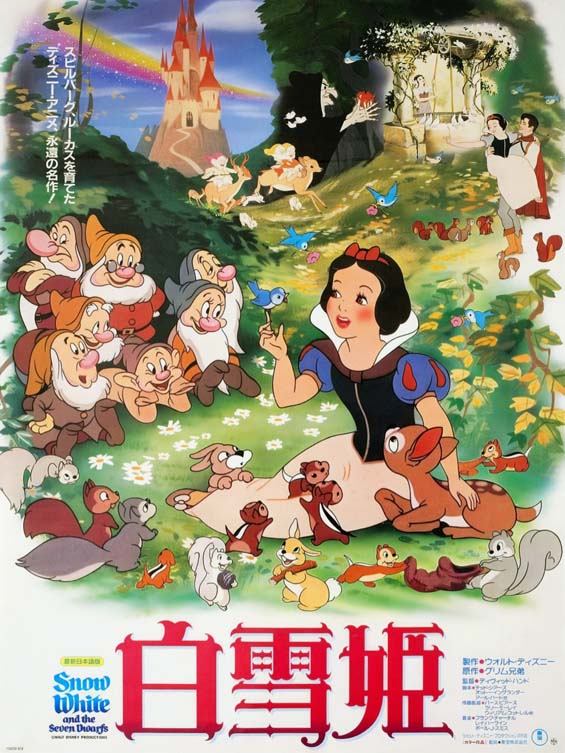
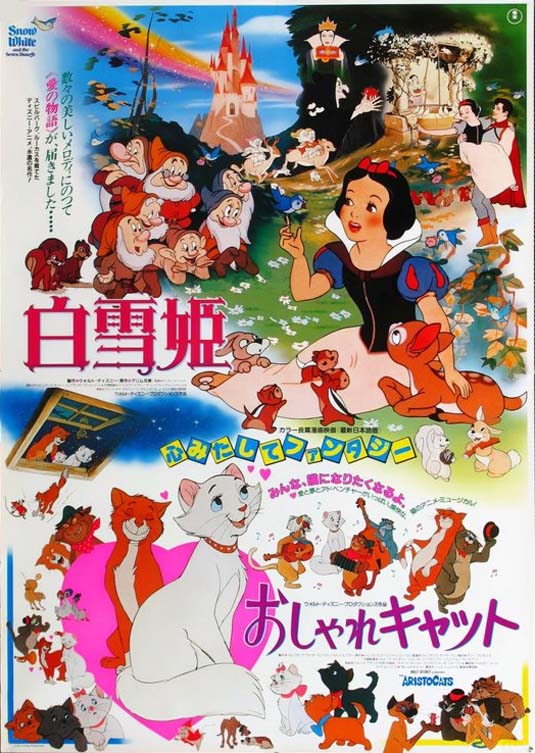
Snow White was released through Toho on July 20, 1985 with the tagline: “Disney animation, which nurtured Spielberg and Lucas, is an eternal masterpiece!” and the film was shown on a double bill with The Aristocats.
1990
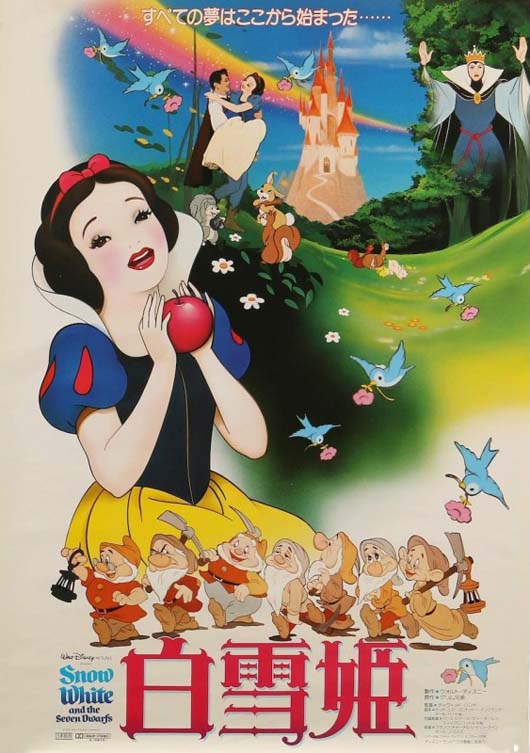
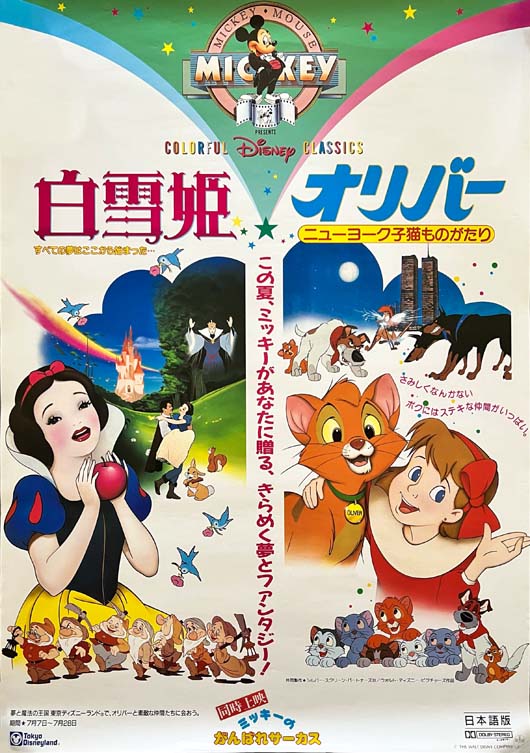
“It all started here” was the tagline used for the July 21, 1995 re-release of Snow White and the Seven Dwarfs, presented on a double bill with Oliver & Company. Another slogan promised: “This summer, Mickey brings you sparkling dreams and fantasy.”
The program also featured Mickey’s Circus, while audiences were invited to “Meet Oliver and his wonderful friends at Tokyo Disneyland, the kingdom of dreams and magic, from July 7 to July 28.”
1994
Snow White comes out again in 1994 through Buena Vista International in a digitally restored version. The poster reads: “Beauty and the Beast, Aladdin, the origins of Disney lie in these classic stories.”