Information
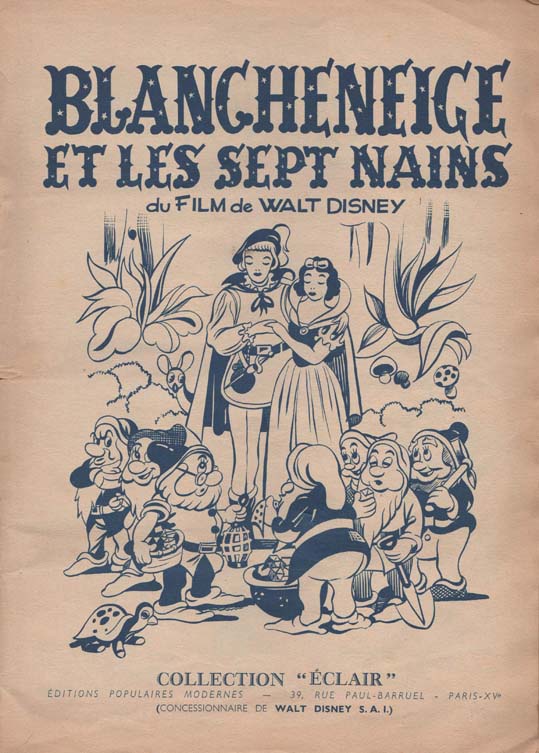
Complete title: Snow White and the Seven Dwarfs – Collection “Éclair”
Author: unknown
Illustrations: unknown
Printing: Georges Lang, 11 rue Curial, Paris 19e
Publication Date: 4th trimester 1951
Publishers: Éditions populaires modernes, 39 rue Paul-Barruel, Paris 15e
Country: France
Retail price: FF60 (album) FF10 (4-picture packet)
Dimensions: 8.6” x 12.2”
Number of pages: 30
Number of pictures: 240
Back to French Books
Lightning Collection
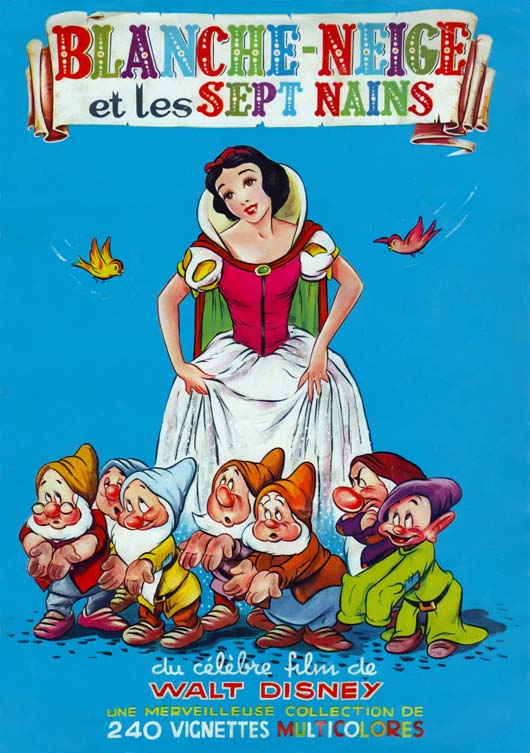
Published to coincide with the French theatrical reissue of Snow White and the Seven Dwarfs in the fall of 1951, this sticker album was part of the Collection Éclair, a series produced by Éditions Populaires Modernes, a Paris-based publisher specializing in inexpensive publications for young readers.
Long before Panini popularized sticker collecting, France already had a rich tradition of collectible albums. Beginning in the late nineteenth century, the famous Menier chocolate albums—and later those issued by numerous food manufacturers—invited children to assemble collections of chromolithographic cards obtained through product purchases or distributed separately.
The Snow White album published in the Collection Éclair clearly belongs to this tradition.
The main difference lies in its distribution. Instead of serving as a promotional premium for a chocolate brand, the pictures became a commercial product in their own right, sold in small packets through bookstores and newsstands.
The Collection Éclair album was far from unique. A remarkably similar Italian edition was published the same year by Lampo, using the same concept of 240 collectible pictures and sharing a large portion of the artwork.
Comparable albums also appeared in Spain and throughout South America during the following years, demonstrating how Disney and its international licensees adapted the same basic concept for different national markets.
Each country, however, modified the page layouts, text, or artwork to suit local tastes and publishing traditions.
Before the age of self-adhesive stickers
At the time, the pictures were simply printed on paper. Collectors had to cut them out carefully and glue them into the album using paste or gum arabic. This method remained virtually unchanged for decades. Only in the 1970s, when self-adhesive stickers became widespread—largely thanks to Panini—did this time-consuming step gradually disappear.
The Collection Éclair album is therefore a valuable reminder of this transitional period, when collecting still required scissors, a tube of glue… and plenty of patience.
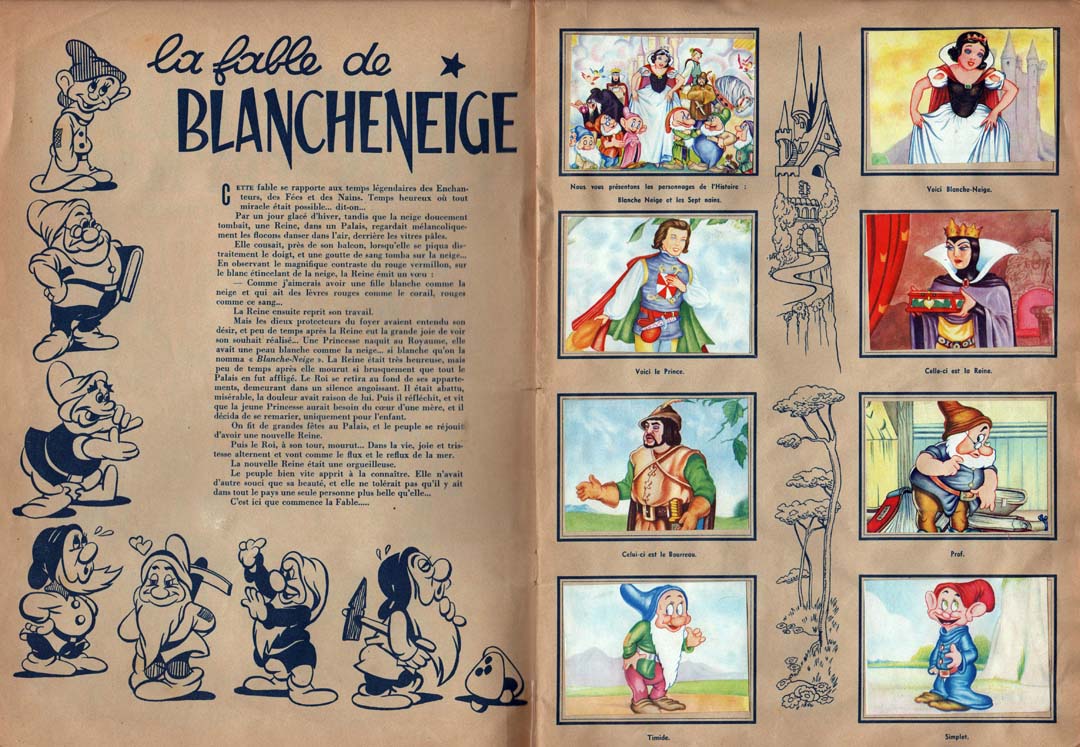
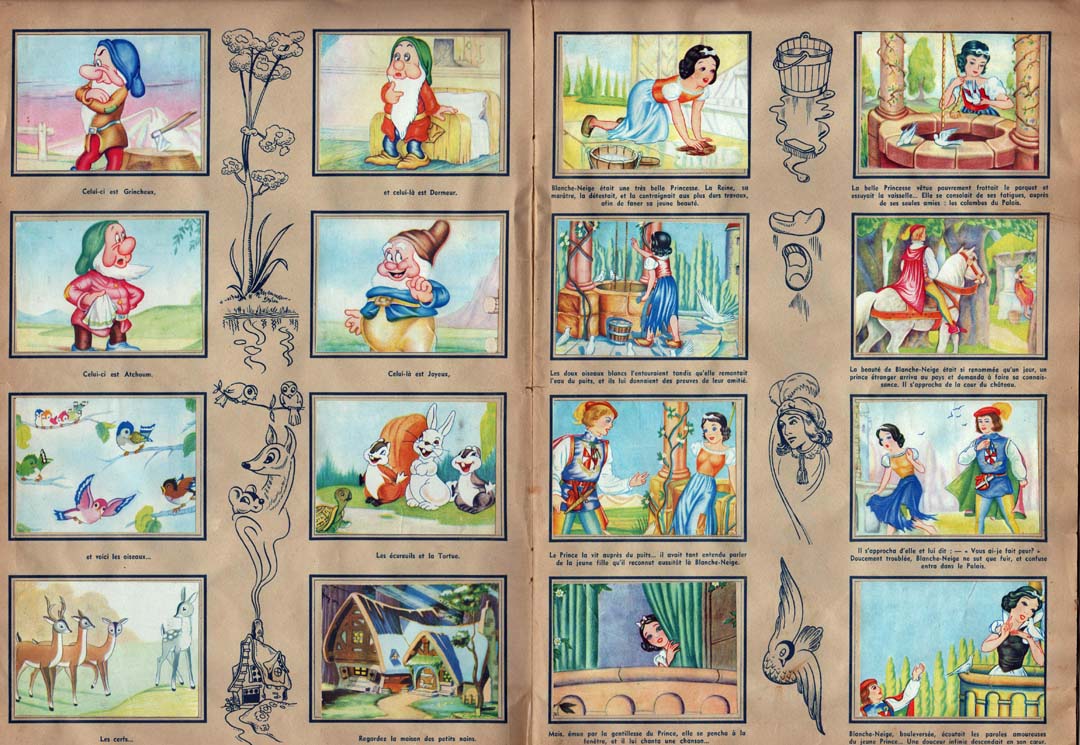
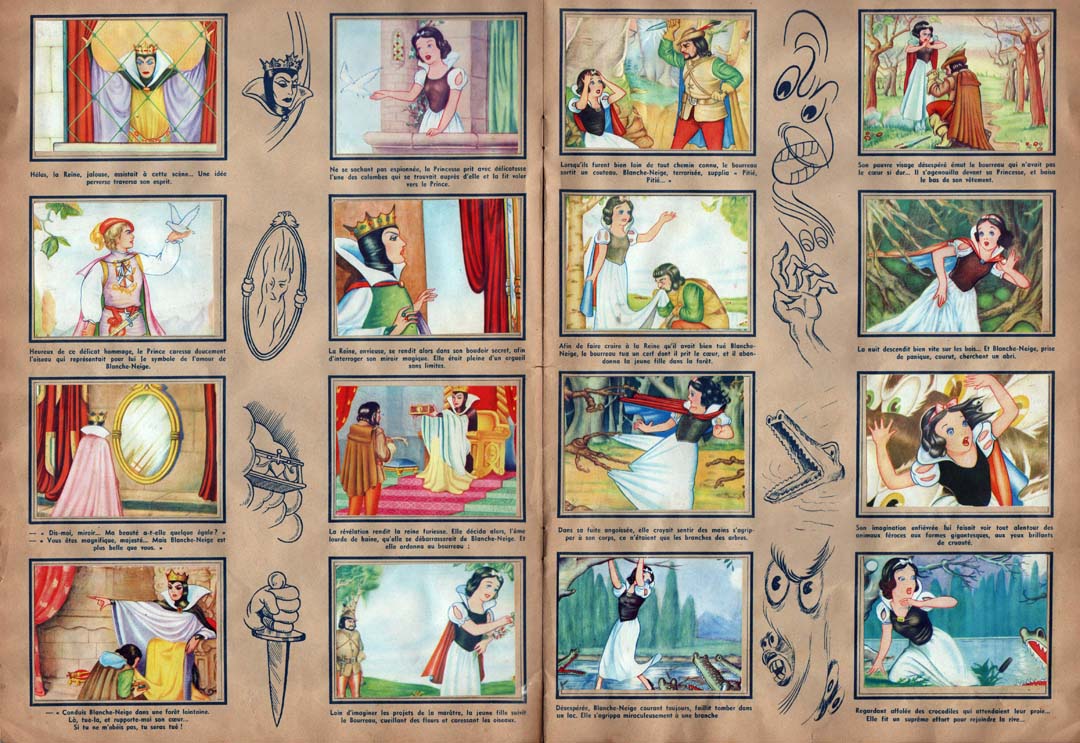
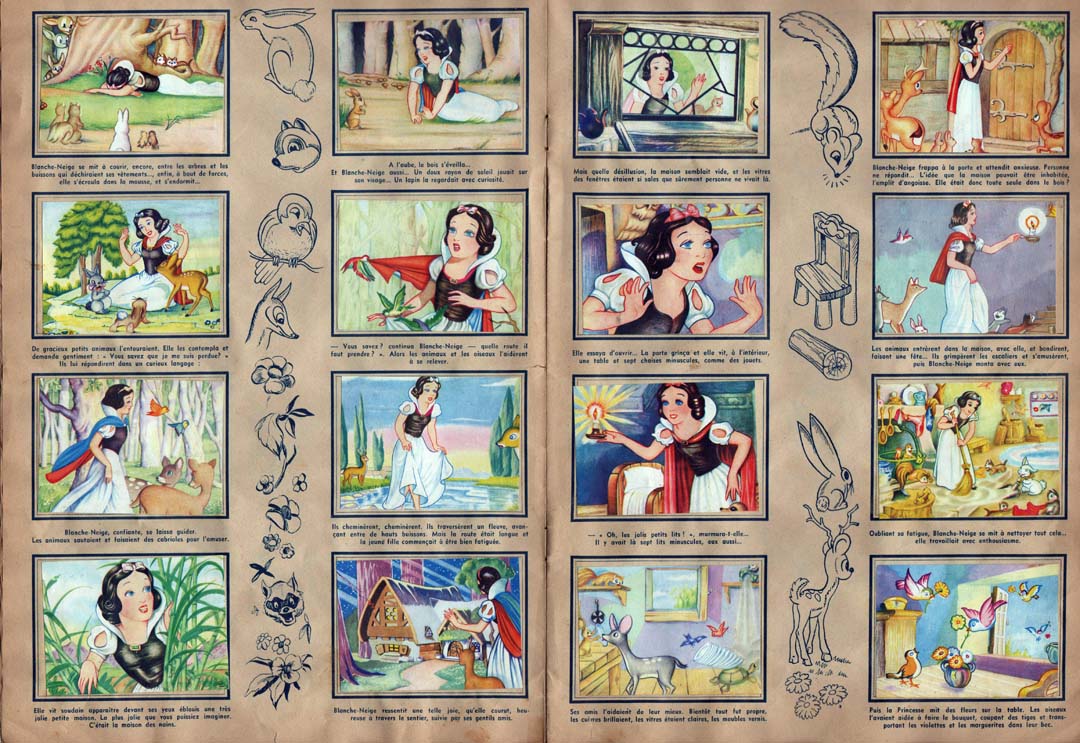
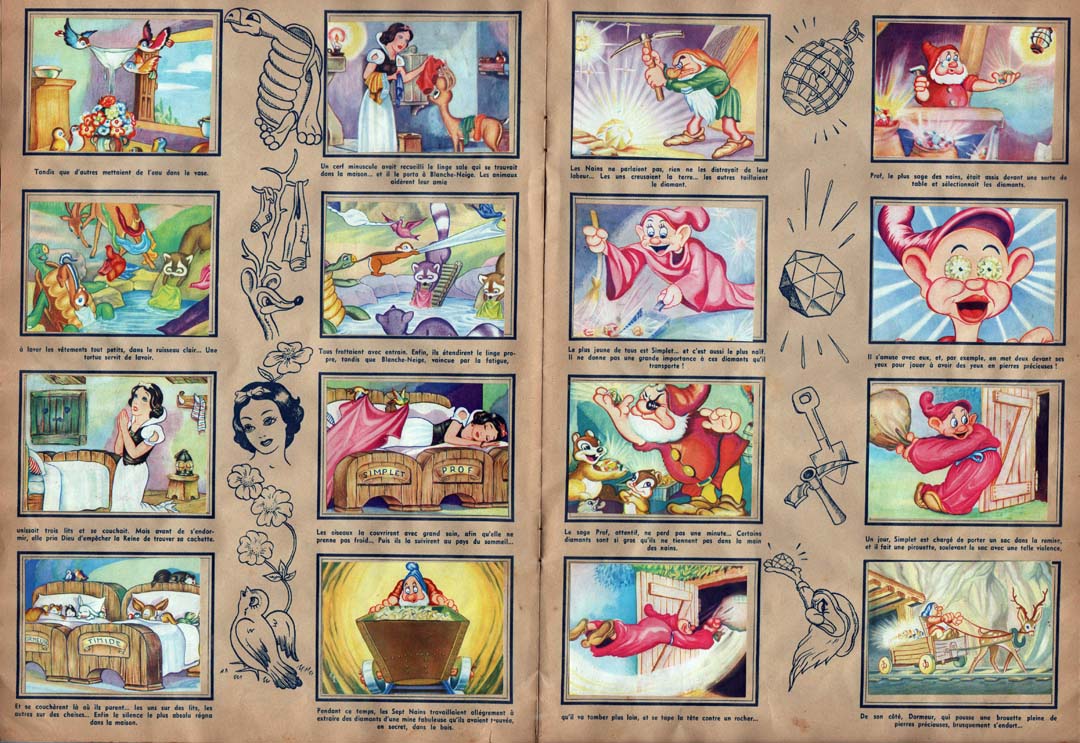
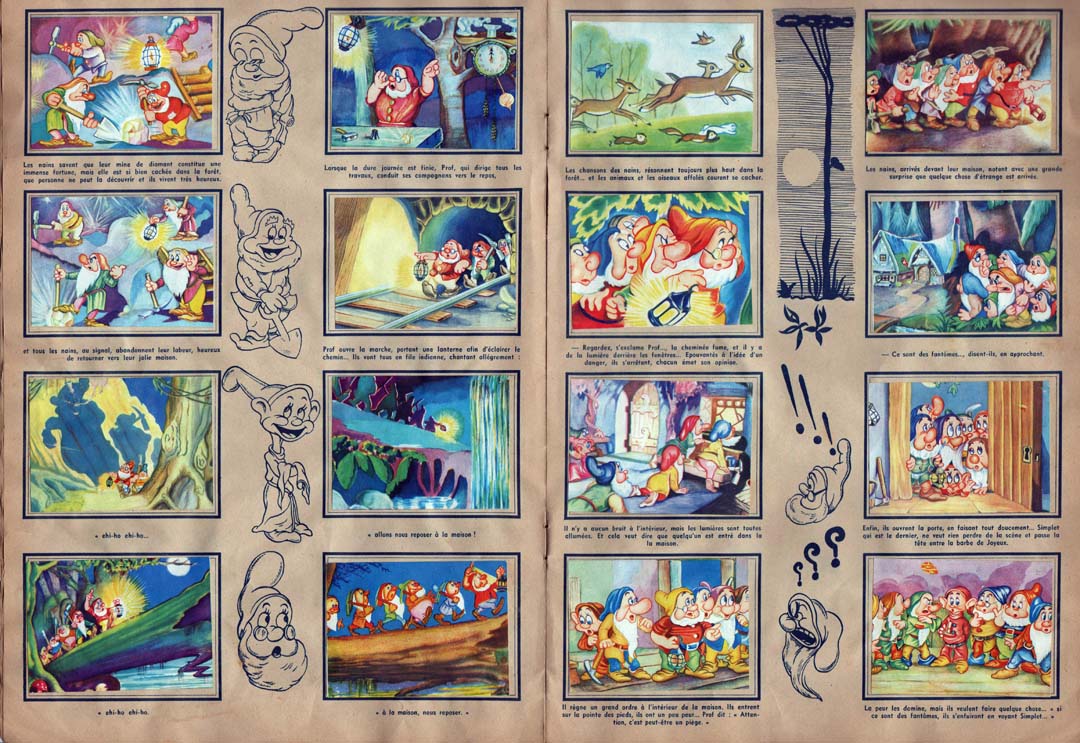
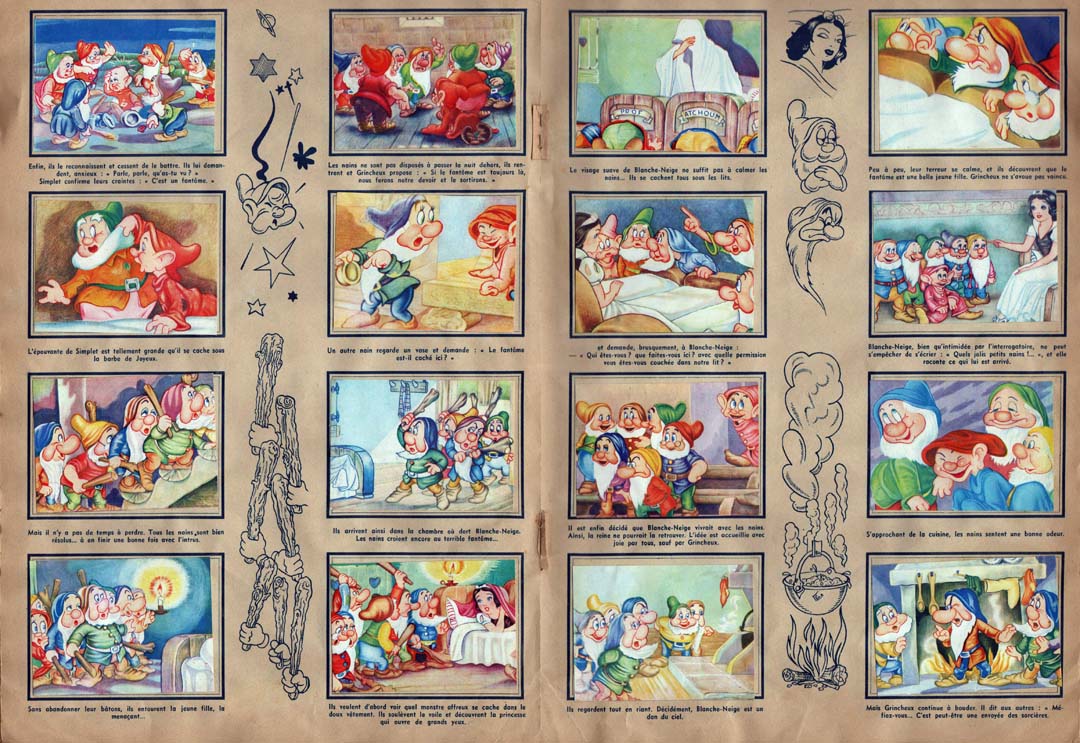
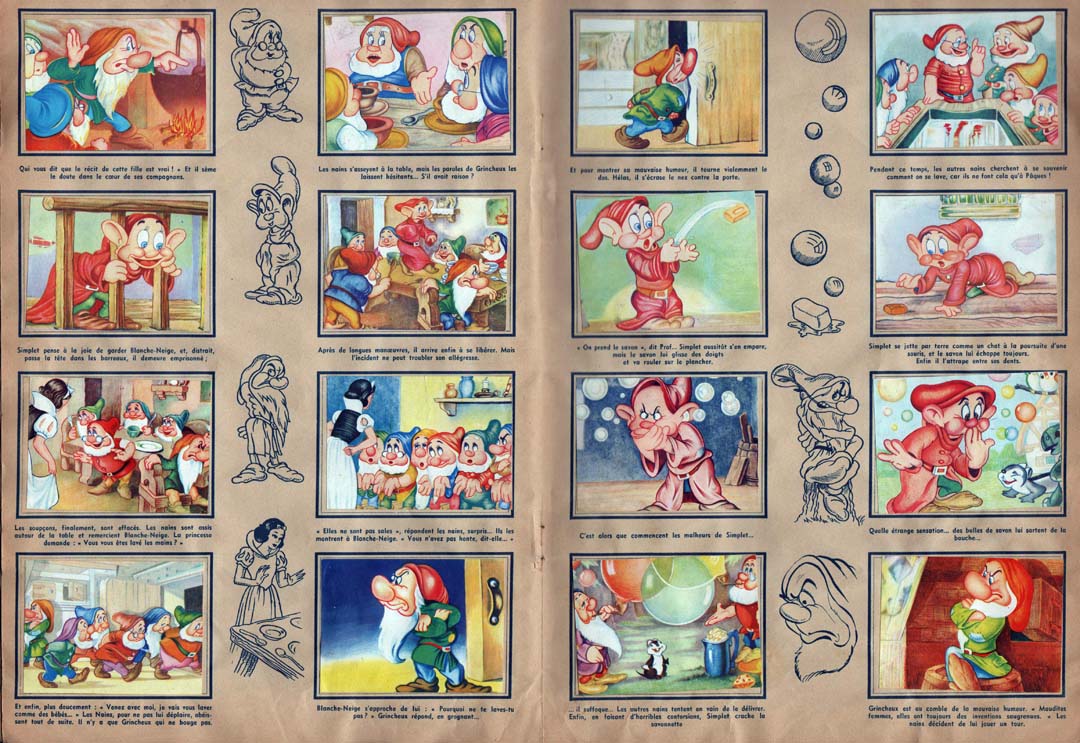
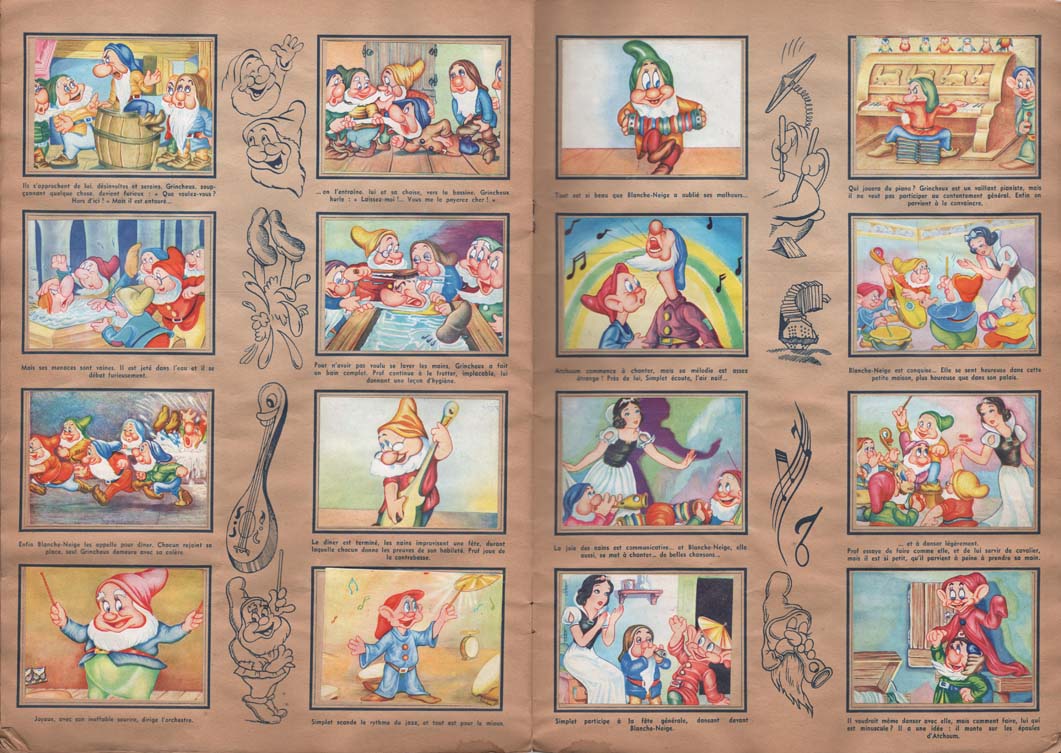
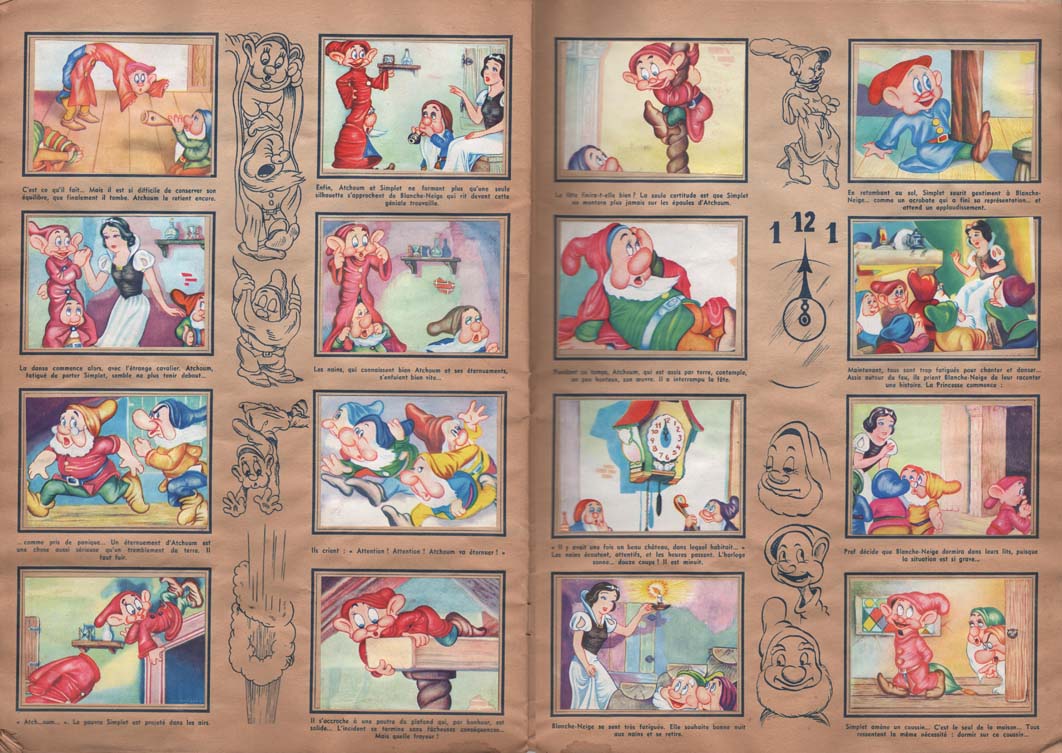
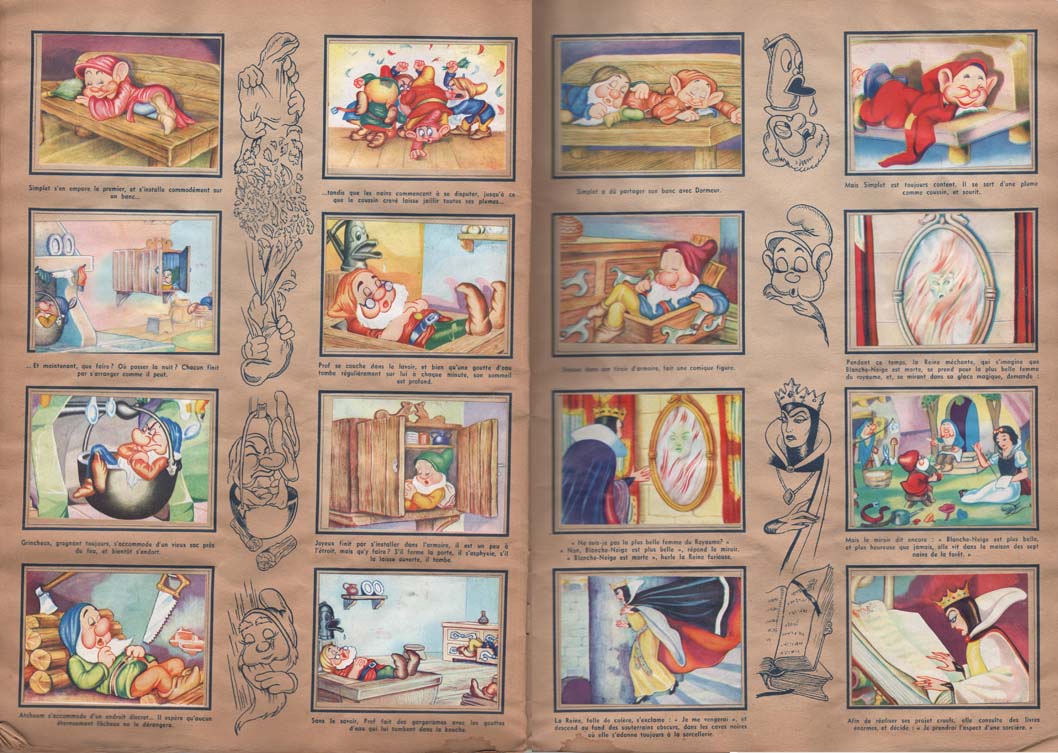
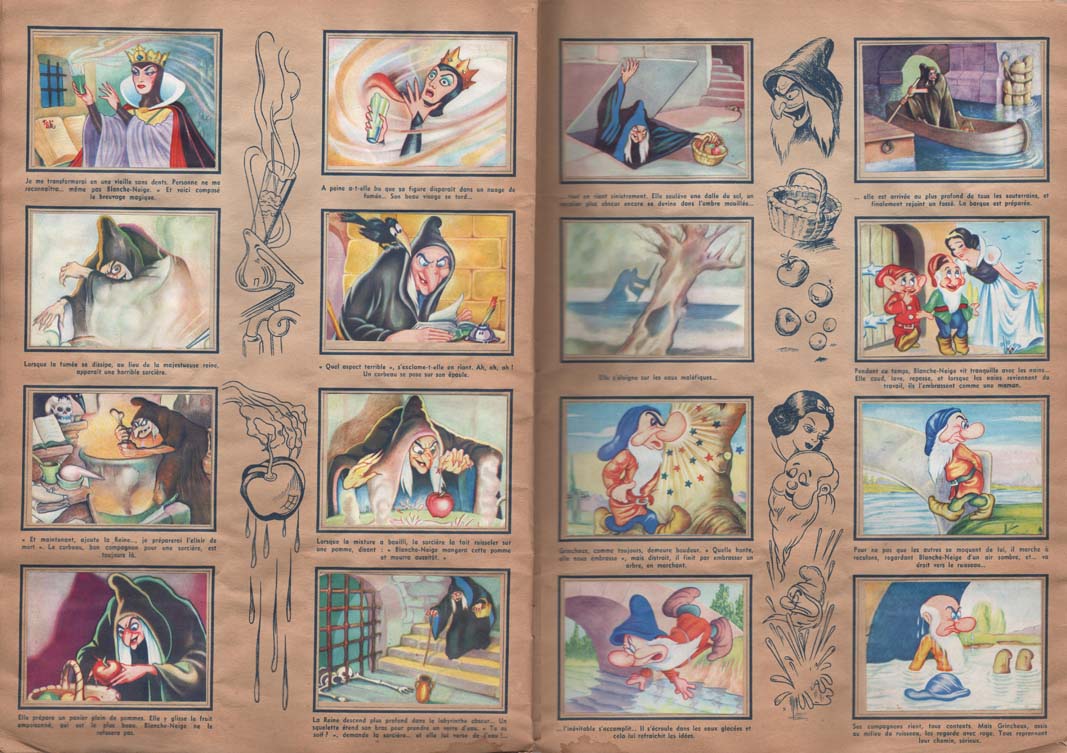
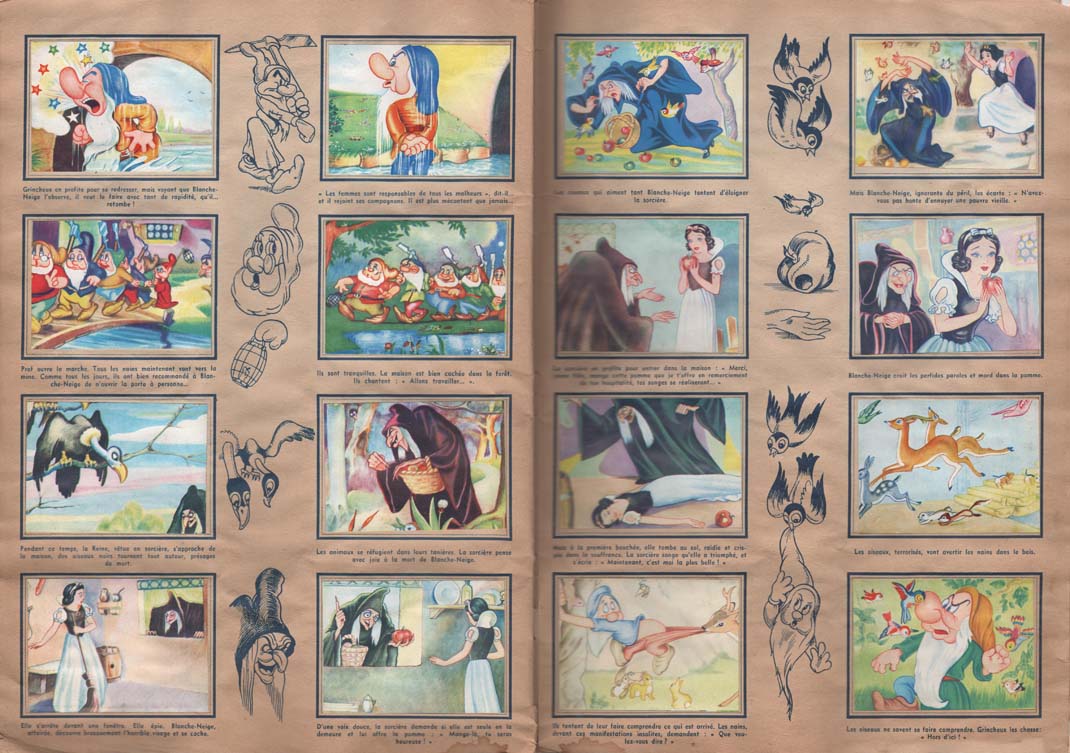
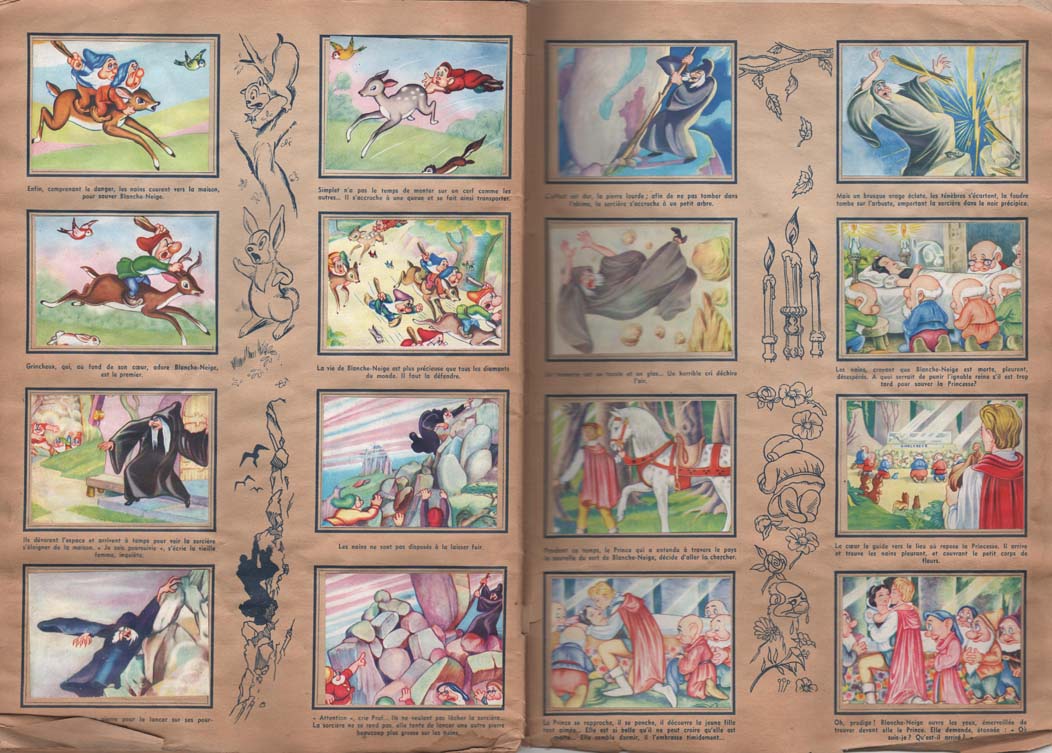
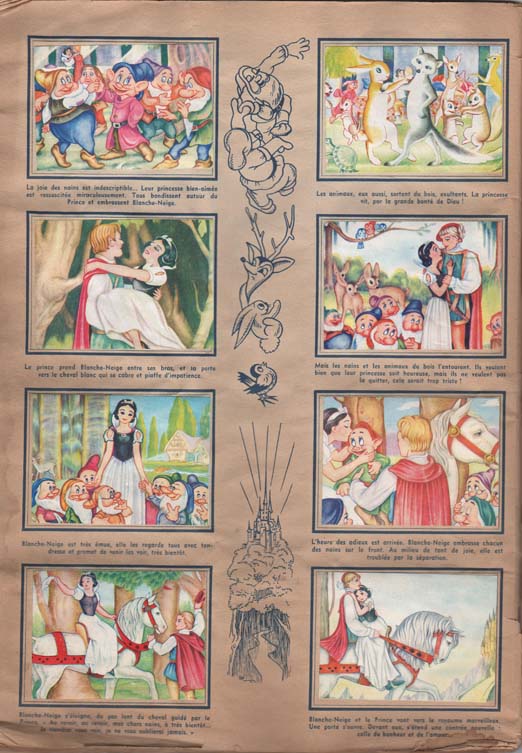
The album consists of 30 black-and-white pages designed to hold 240 full-color pictures, arranged as sixteen images across each two-page spread.
Unlike traditional illustrated books, almost none of the color artwork is printed directly on the pages. Instead, each picture was supplied separately and had to be pasted into its designated space by the collector.
The pages are decorated with numerous monochrome drawings of the film’s main characters, trees, the castle, and other decorative motifs framing the picture spaces. As a result, the album gradually transforms from a mostly monochrome publication into a richly colored one as more and more pictures are added.
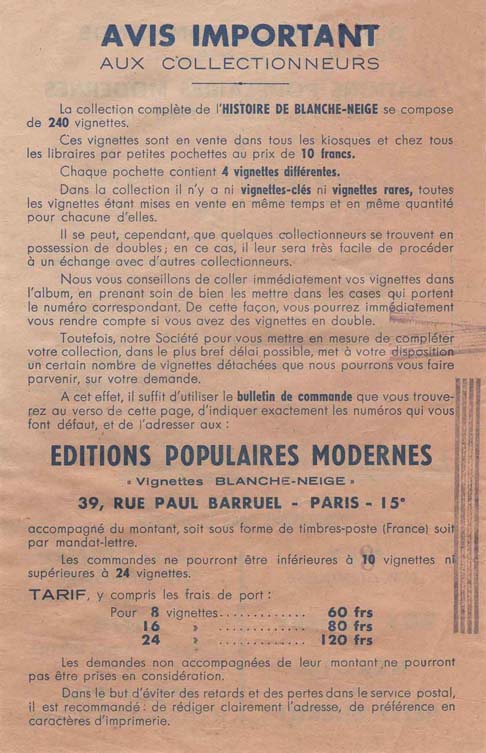
The pictures were sold in small paper packets available from newsstands and bookstores. Each packet cost 10 francs and contained four different pictures.
The publisher emphasized one important point:
“There are no key pictures and no rare pictures. Every picture is placed on sale at the same time and in the same quantity.”
This statement addressed a common concern among collectors. Some publishers were accused of deliberately making certain pictures extremely difficult to find in order to encourage children to purchase more packets.
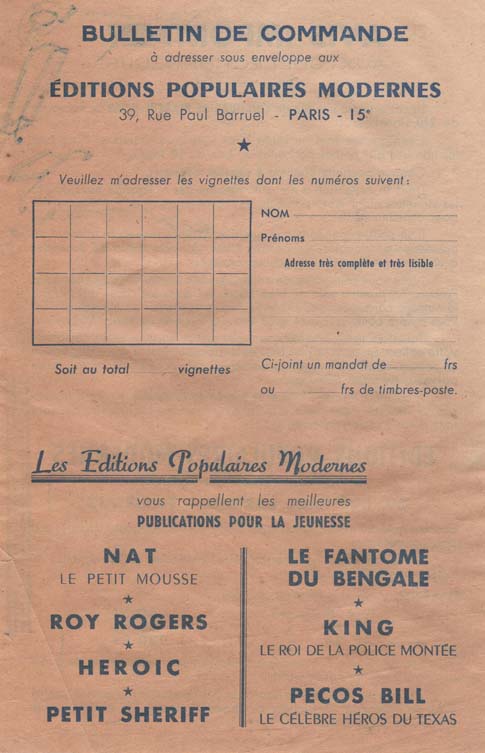
At the end of the album, collectors found an order form allowing them to purchase any missing pictures directly.
Collectors simply listed the desired picture numbers, enclosed payment by postal money order or postage stamps, and received the requested pictures by mail.
Orders were limited to between eight and twenty-four pictures, at the following prices:
- 8 pictures: 60 francs
- 16 pictures: 80 francs
- 24 pictures: 120 francs
This replacement service, which would become a hallmark of Panini decades later, already existed in France during the early 1950s.
In addition to several non-Disney titles, the Collection Éclair also advertised another Disney film adaptation: Pecos Bill, based on the segment from Melody Time, which had been released in France on February 28, 1951, only a few months before the publication of this Snow White album.
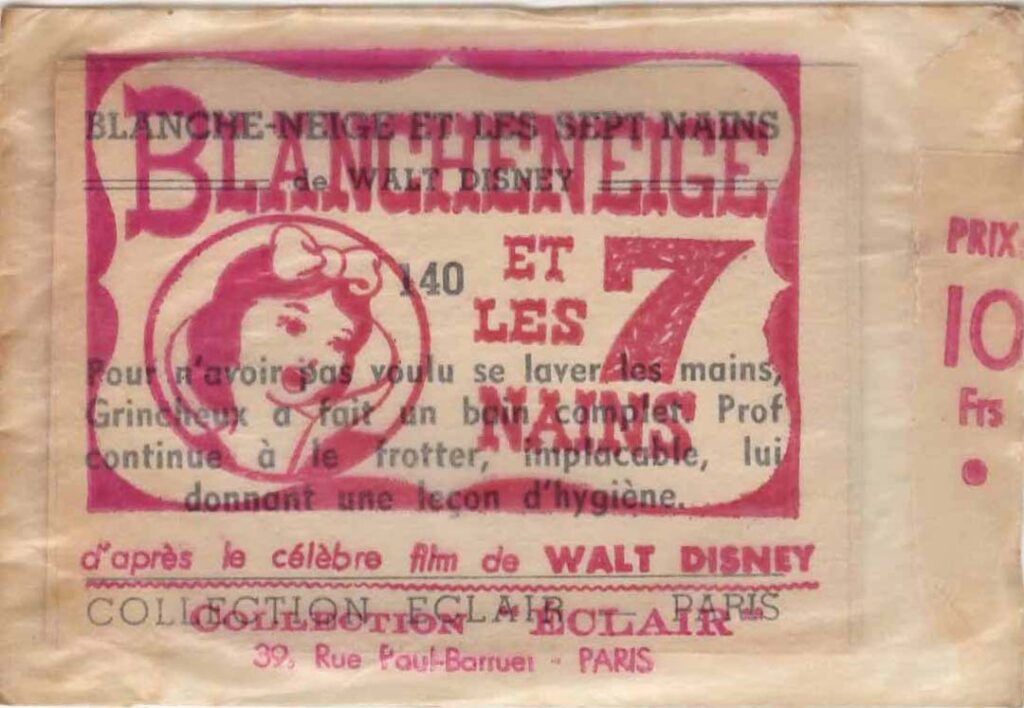
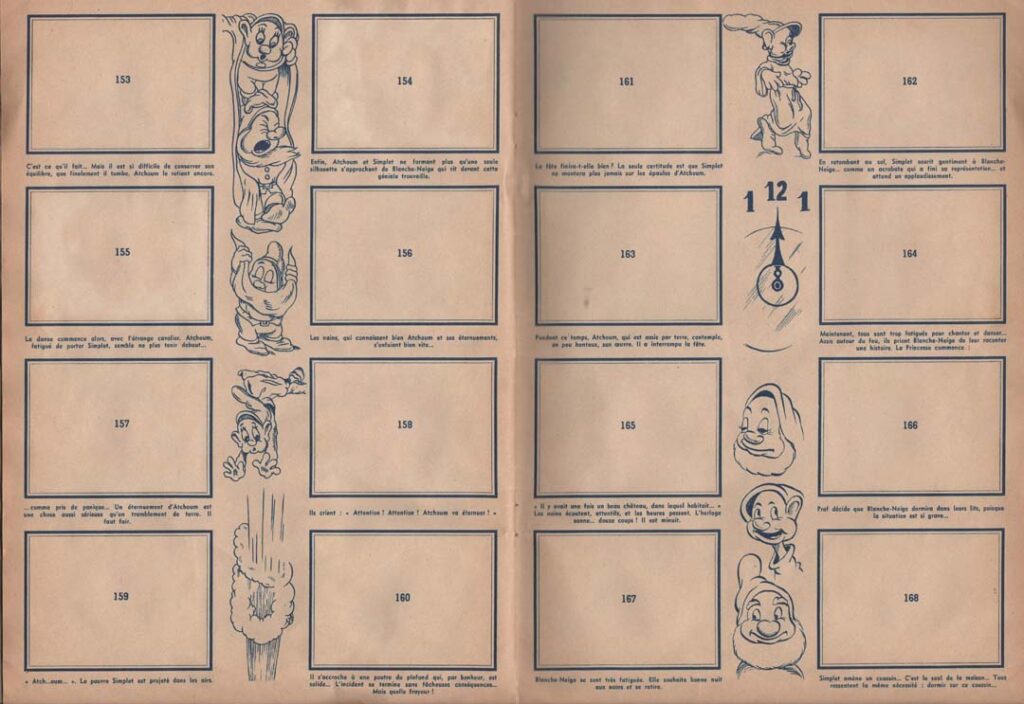
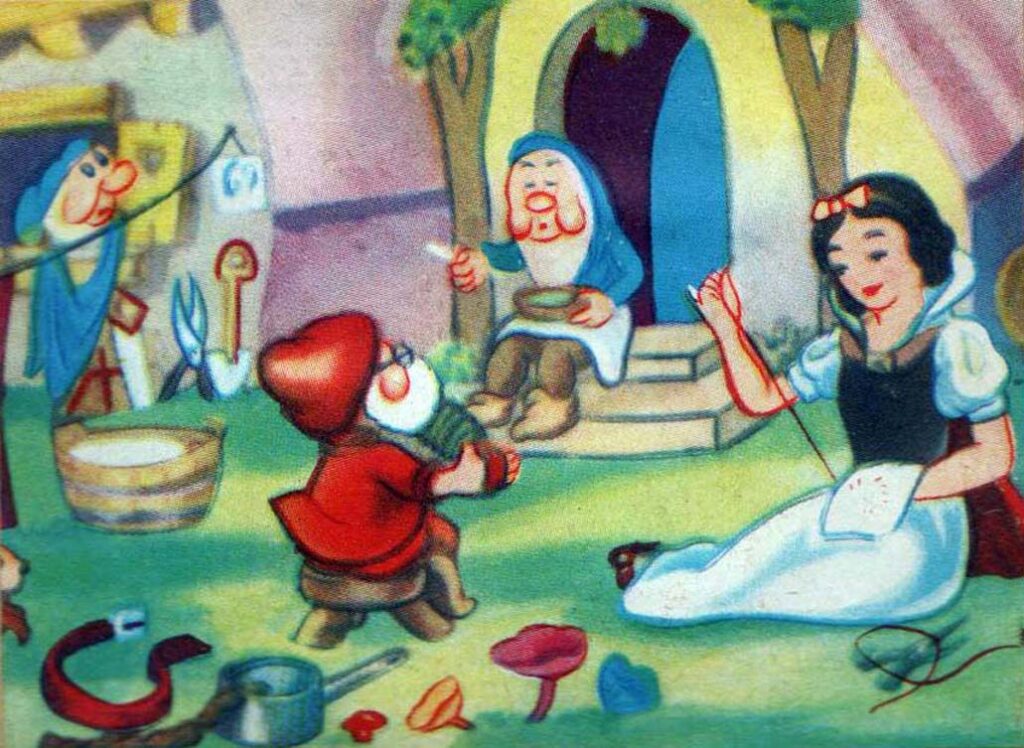
An original graphic adaptation
The illustrations are not film frames, which would have been technically difficult to reproduce in 1951 and would not appear in French Disney albums until 1973.
Like many Snow White albums produced around the world during the same period, this one relies on promotional artwork created specifically for Disney. Much of it was simplified or redrawn to suit the small format of the collectible pictures.
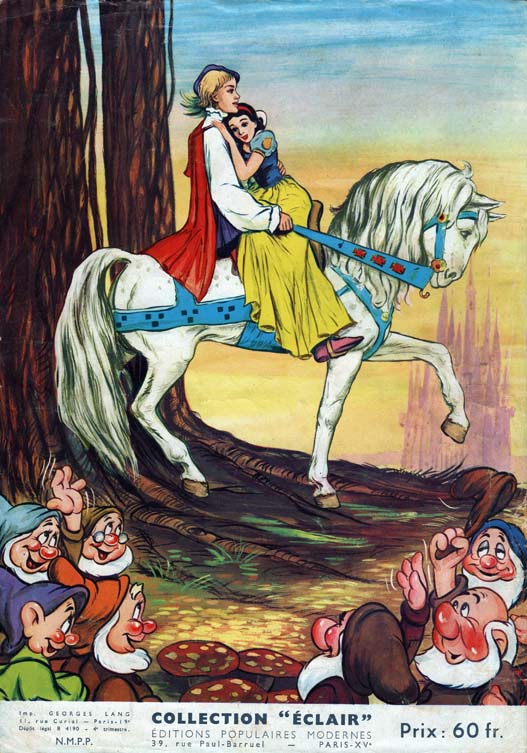
The Prince provides perhaps the most striking example. His costume, proportions, and even certain facial features differ noticeably from those of the animated character seen on screen. Rather than faithfully reproducing the animation drawings, the artwork is clearly based on Disney’s promotional illustrations. His hair color even changes at different points throughout the album.
Several other characters underwent similar simplifications, reflecting the economical printing techniques commonly used during the early 1950s.