Film deteriorates. Over time, decay is inevitable and Snow White and the Seven Dwarfs is no exception. However, restoration techniques evolve and several attempts have been made over the years to preserve the image and sound of this masterpiece so that it remains a timeless jewel.
1965, rescuing the soundtrack
In 1956, the new soundtrack included instrumental moments never heard before. A studio sound man decided soon after that this treasure needed more care.
Bob Cook played a key role in the mid-1960s in preserving the soundtrack of Snow White and the Seven Dwarfs (and later Fantasia). By that time, the original negatives and positive prints had deteriorated to the point that parts of the soundtrack were no longer audible. Cook located usable copies of all but one reel. The missing reel proved difficult to trace, as no known copy existed, including in Technicolor’s holdings. After placing notices in trade publications, he was contacted by a film exchange supervisor who reported that a print of the missing reel from the original 1937 release had been found in Chicago, where it had reportedly been screened only once.
With complete and well-preserved copies of all seven reels, Cook remastered the soundtrack using mixers and equalizers, achieving improved sound quality compared to the original release. He also manually removed several audible defects caused by dirt embedded in the film. As a result of this restoration work, the Snow White soundtrack was preserved in a stable form for long-term use.
1993, the first digital restoration
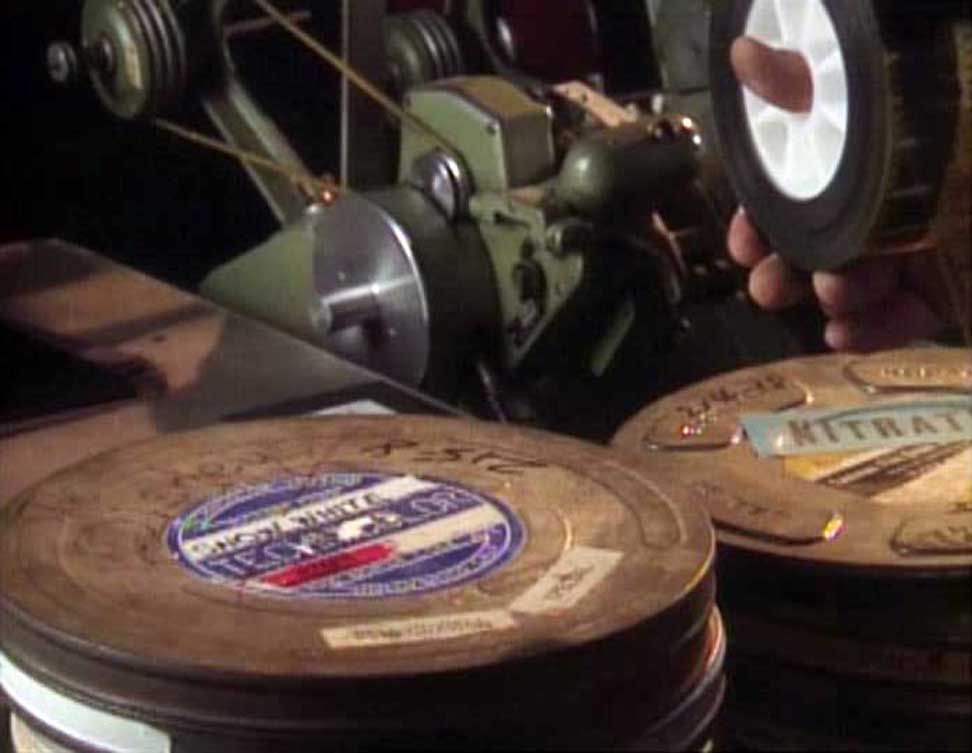
After a successful rerelease in several countries in 1992, it was felt that the image and sound of Snow White were beginning to show their age. Jeff Miller recounts how the studio had gone back to the original nitrate negatives to strike an interpositive and then copies for the 50th anniversary rerelease in 1987. In spite of that, he “could not believe how much dirt was actually in the film”.
In partnership with Cineon, a Kodak division, credited “Cinesite Inc.” in the end titles, the 1987 elements were scanned and digitized to be restored digitally over the course of six months.
At the same time, the film’s soundtrack was also restored by Randy Thornton and the team at Buena Vista Sound so that it could be presented in Dolby Stereo in selected theaters. The CD booklet accompanying the OST release of this restoration describes the process using various sources, ranging from nitrate instrumental tracks to final composite masters.
That restoration was the basis for the 1993 theatrical rerelease and, a year later, for the first home video release of the film.
Here is how this restoration was described in the 1994 French home video press kit:
To mark the film’s 50th anniversary, the Disney Studios undertook a restoration of the original negative, entrusting the work to the highly advanced Cinesite laboratories. Renowned for their expertise, Cinesite had previously handled the restoration of Gone with the Wind as well as several hundred classics from Hollywood’s Golden Age.
In 1937, the color process relied on successive passes of yellow, blue, and red on the same strip of film. For the restoration, these original elements were cleaned by hand and dusted frame by frame. Stains, tears, and scratches were carefully repaired. After this meticulous work, a new interpositive was created using a liquid-gate contact printing process—rather than optical printing—to ensure an image transfer fully faithful to the original negative. This method eliminated many scratches that had accumulated over the years, along with certain flaws inherent in the original materials.
Thanks to high-definition film stocks, the final result exceeded all expectations, delivering improvements that in some respects even surpassed the original.
The Disney Studios then turned to even more advanced techniques for the film’s theatrical re-release in the United States the previous summer. Snow White and the Seven Dwarfs became the first film in cinema history to be restored and preserved using new digital technologies.
It took 18 weeks to scan the film’s 119,500 frames. Some were so complex in detail that a single frame corresponded to a digital file of 40 megabytes. In total, the amount of stored data was equivalent—by comparison—to more than three billion pages of an encyclopedia.
After being digitized, the film was further refined using computer imaging. Each frame underwent extensive cleaning and precise adjustments. The final step involved creating a new negative using laser recording. Thanks to digital technology, copies of the film can now be produced with exceptional fidelity to the original at the push of a button. As Ed Jones, President of Cinesite, explained: “Filmmakers have always dreamed that their work would outlive them. We’re simply using the capabilities of computers to make that dream a reality. But the greatest compliment is the recognition of our work by those who were involved in the original Snow White project—the veteran Disney animators.”
The result is truly remarkable: audiences around the world can now experience Snow White and the Seven Dwarfs in near-pristine condition, with picture and sound of outstanding quality, as if the film had been created just months ago.
2001, HD video
For the upcoming DVD release of the film, the studio went back to the Cineon files and converted them directly to HD video without needing the film intermediate. From that, color correction and grain reduction was applied, the aim being for the end product to look like the original cels directly filmed on video.
As a matter of fact, it appears that the moving elements of the image were isolated from the backgrounds and later reassembled once the elements had been cleaned. This was also the most recent restoration to date to include some—if not all—of the foreign insert shots and title cards.
Animators Ollie Johnston and Frank Thomas were brought in to validate the creative choices.
A 5.1 soundtrack was created from the various stems specifically for the DVD release.
2009 Color correction
The Blu-ray release of Snow White came from a high-definition version of the movie sourced from a new restoration by Lowry Digital who also worked on Pinocchio, Beauty and the Beast, Lady and the Tramp, the original Star Wars trilogy, the James Bond movies and others.
A pinkish tint is evident on this restoration, probably to emulate the warm hues of Technicolor.
2023, here comes 4K!
In 2023, the film was restored in 4K in 2023 by The Walt Disney Studios at Picture Shop Hollywood and Prime Focus Technologies laboratories from the original nitrate negative. It was then released on 4K UHD Blu-ray and on Disney +.
On this release, grain has been restored back into the film.